What is infusion therapy?
Going home with an IV prescription can feel like a lot to take in. Here is what it means, where it can happen, and what you will use.
Infusion therapy, in plain terms.
Infusion therapy delivers medication or nutrition straight into the bloodstream, through a small tube placed in a vein, instead of by mouth. It is used when a medicine would not be absorbed well through the stomach, when it needs to work quickly, or when it has to run slowly over hours.
Home infusion means receiving that therapy where you live. Many people find it easier than travelling for every dose, and more comfortable in familiar surroundings.
Not every medicine can be given at home — some need closer watching for reactions. Your prescriber decides where your therapy is safest.

Why people choose home.
- Medication and supplies come to you — no travelling to a clinic for every dose.
- Treatment fits around your day rather than a clinic timetable.
- You recover in your own surroundings, with family close by.
Where infusions happen.
There are three common settings. Your prescriber chooses based on your medicine and how closely you need to be watched while it runs.
-

At home
A nurse starts your therapy and teaches you or a caregiver to continue it. Suits many antibiotics, nutrition and long-running therapies.
-

In an infusion suite
An outpatient room run by an infusion provider, with a nurse present throughout. Useful when a therapy is hard to give safely at home.
-

In a clinic or hospital unit
A physician is on hand. Often used for the first dose of a new medicine, or for drugs that need close monitoring.
Pumps you might use.
A pump controls how fast your medicine goes in. Your prescriber and pharmacist choose the one that fits your therapy — and your day.
-
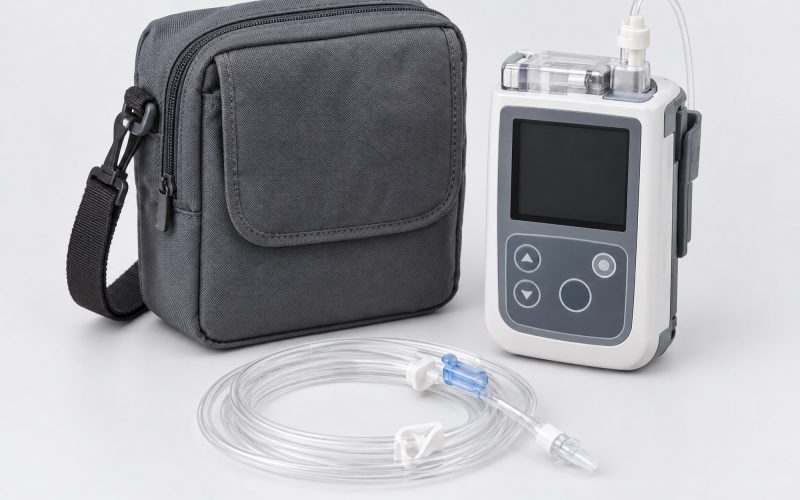
Portable pump
Small and battery-powered, carried in a pouch or backpack so you can move around during long infusions.
-
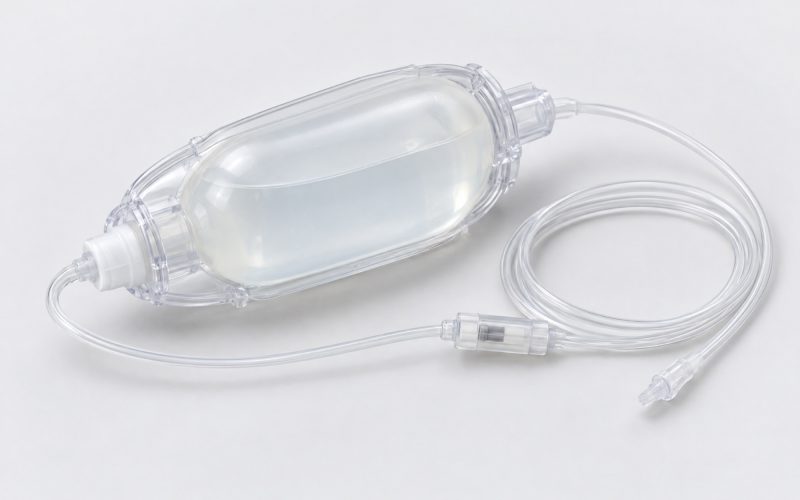
Elastomeric pump
A single-use balloon that empties at a set rate. No buttons, no batteries, nothing to programme.
-
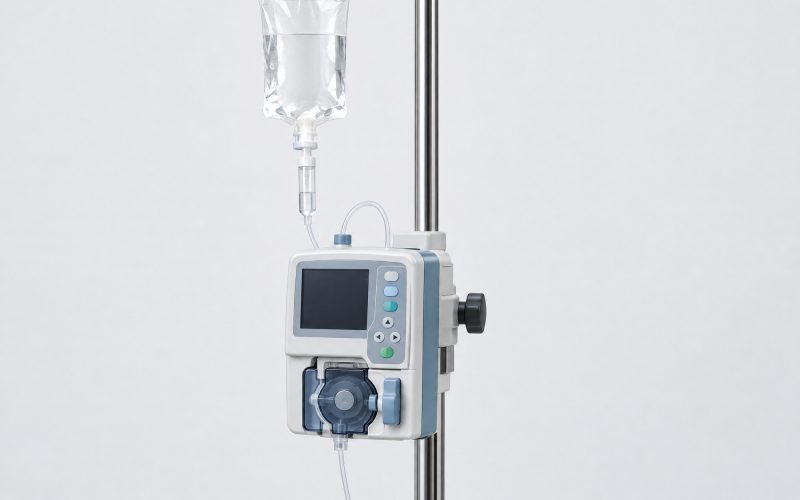
Pole-mounted pump
Sits on an IV stand beside a chair or bed. Common for infusions given at set times of day.
-
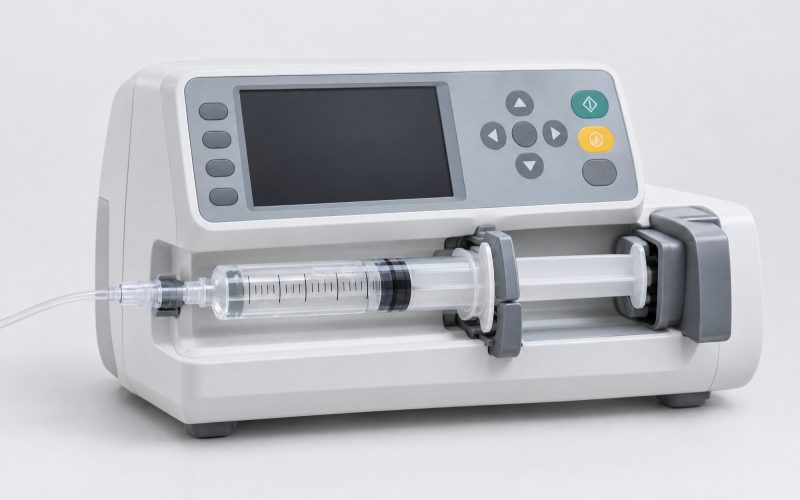
Syringe pump
Pushes a small, measured dose from a syringe. Used for low volumes that need a precise rate.
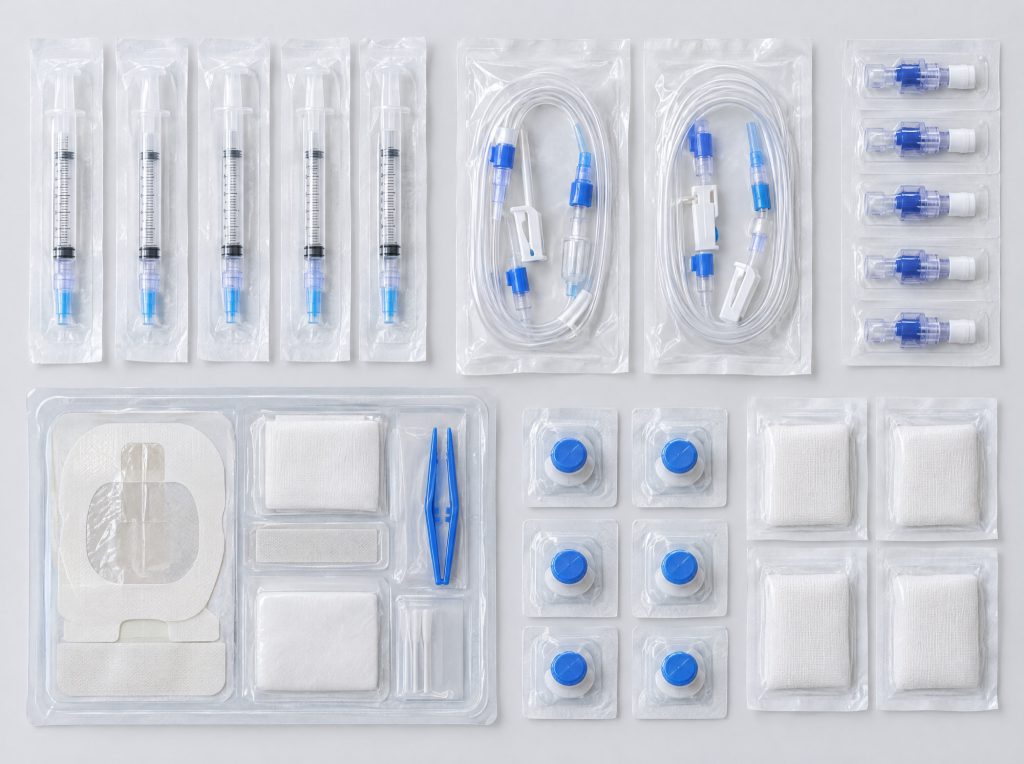
Supplies delivered with your therapy
- Saline and heparin flushes
- IV administration sets and extension tubing
- Needleless connectors and disinfecting caps
- PICC line and port dressing kits
- Catheter care supplies
- Gloves, gauze and alcohol swabs
- A sharps container for safe disposal
Questions people often ask
Can every IV medicine be given at home?
No. Some medicines carry a risk of reactions that needs watching in a clinic, and some can only be given in a hospital or physician’s office. Your prescriber makes that call, and we will tell you straight away if a therapy is not suitable for home.
Who puts the line in?
It is usually placed before you leave hospital, or at an outpatient appointment. At home, a nurse looks after it — dressing changes, flushing, and checking for any signs of a problem.
Will I have to do it myself?
Often you or a caregiver will connect and disconnect routine doses once you have been trained. A nurse shows you step by step and makes sure you are confident before leaving you to it.
Is home infusion covered by insurance?
Many plans cover it, but coverage for the medication, supplies and nursing varies. We check your benefits before therapy starts and tell you about any cost you would pay.
What if something seems wrong?
Call the pharmacy and your prescriber. If you have trouble breathing, swelling of the face or throat, chest pain, or you feel faint, call 911 first.
Have a home infusion prescription?
Tell us about it and a pharmacist will walk you through what happens next.